

Do your employees find it difficult to remember the order in which they should put on and take off PPE?
The CDC recommended order for donning items is not the same as for doffing PPE used for protection from blood-borne pathogens or in isolation precautions settings.
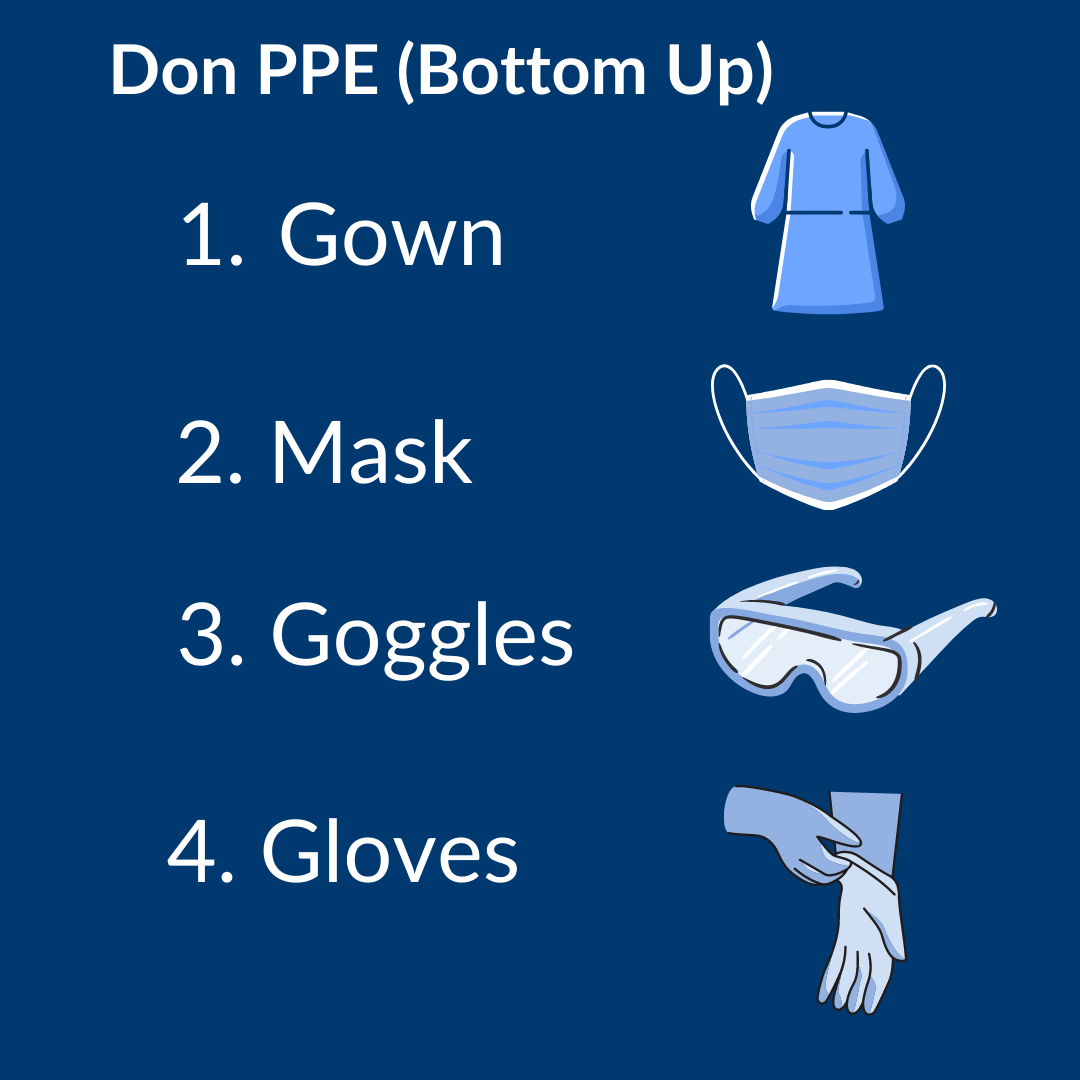
Use the following mnemonic tip:
Don PPE from the bottom up:
- Gown
- Mask
- Goggles
- Gloves (when raised above the head)
Doff PPE in alphabetical order:
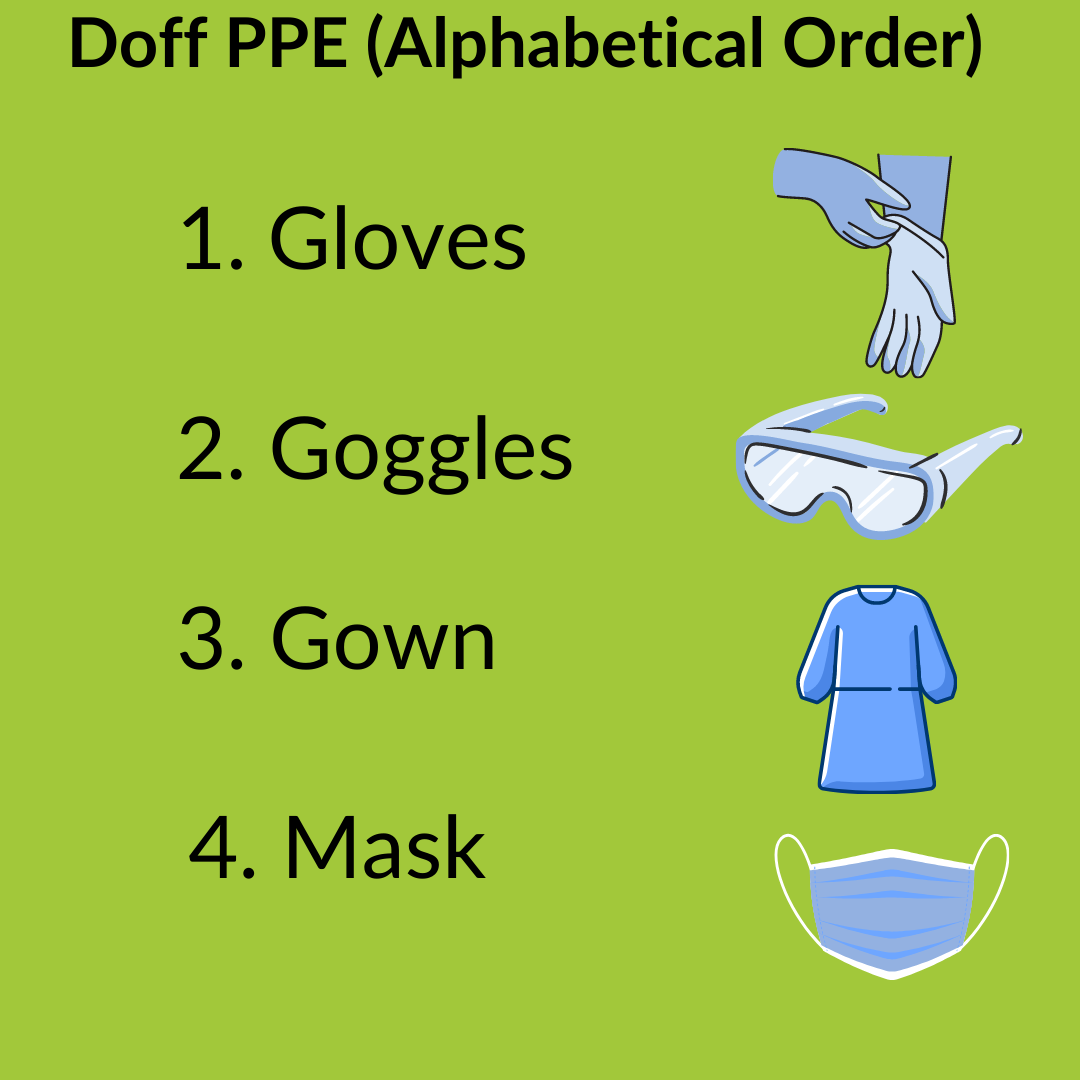
- Gloves
- Goggles
- Gown
- Mask
Staff members may respond positively to having a graphic/mnemonic reminder at each PPE dispensing station.
Why Proper PPE Donning and Doffing Matters in Healthcare
Correctly donning and doffing Personal Protective Equipment (PPE) is a critical component of OSHA workplace safety, CDC infection control, and overall healthcare compliance. Improper PPE removal is one of the leading causes of self-contamination among healthcare workers, particularly in environments involving bloodborne pathogens, airborne precautions, or isolation settings.
According to OSHA and CDC guidance, healthcare workers must receive initial and ongoing PPE training to reduce the risk of exposure to infectious materials, chemical hazards, and bodily fluids.
PPE Training Requirements for Healthcare Employees (2025)
In 2025, healthcare employers are expected to ensure PPE training includes:
-
What type of PPE is necessary for specific tasks
-
How to properly don, adjust, wear, remove, and dispose of PPE
-
PPE limitations and maintenance
-
How PPE fits into OSHA Bloodborne Pathogens and Hazard Communication standards
Failure to train staff correctly may result in:
-
OSHA citations
-
Increased workplace injuries or exposures
-
Infection control breaches
-
Increased liability and compliance risk
Common PPE Donning and Doffing Errors
Healthcare compliance audits frequently identify the following issues:
-
Removing PPE in the wrong order
-
Touching contaminated surfaces during doffing
-
Wearing gloves without proper hand hygiene
-
Reusing disposable PPE incorrectly
-
Lack of visual reminders at PPE stations
This is why simple mnemonics and visual signage are proven tools for reinforcing proper PPE procedures.
Using Visual PPE Reminders to Improve Compliance
Posting donning and doffing PPE reminders at PPE stations helps:
-
Reduce human error during high-stress situations
-
Support staff with varying experience levels
-
Reinforce OSHA and CDC guidance
-
Improve compliance during inspections and audits
-
Standardize PPE use across departments
Facilities that use graphics, posters, and mnemonic tools report higher compliance rates and better training retention.
PPE and OSHA Compliance in Healthcare Settings
PPE usage falls under several OSHA standards, including:
-
Hazard Communication (GHS)
-
Personal Protective Equipment Standard
-
Respiratory Protection Standard (when applicable)
Healthcare organizations must ensure PPE policies align with:
-
OSHA requirements
-
CDC infection control recommendations
-
Facility-specific risk assessments
PPE as Part of a Comprehensive Workplace Safety Program
PPE is most effective when combined with:
-
Engineering controls
-
Administrative controls
-
Exposure control plans
-
Regular safety training and audits
PPE should never be the only line of defense, but it remains a vital component of a comprehensive Workplace Safety Program (WPS).
Ongoing PPE Training and Annual Refreshers
Because healthcare environments and risks evolve, PPE training should be:
-
Included in new hire onboarding
-
Reinforced during annual compliance training
-
Updated when procedures or equipment change
-
Documented for audit readiness
Organizations that provide consistent PPE education are better positioned to meet OSHA requirements and protect employee health.
Key Takeaway: PPE Compliance in 2025
Proper PPE donning and doffing:
-
Protects healthcare workers and patients
-
Reduces exposure incidents
-
Supports OSHA and CDC compliance
-
Strengthens overall infection prevention efforts
Using clear mnemonics, visual reminders, and ongoing training is one of the most effective ways to improve PPE compliance in healthcare settings.
Frequently Asked Questions: PPE Donning and Doffing (2025)
What is the correct order for donning PPE?
The CDC recommends donning PPE from the bottom up:
-
Gown
-
Mask
-
Goggles or face shield
-
Gloves (when hands are raised above the head)
Using this order helps reduce contamination and ensures proper coverage.
What is the correct order for removing (doffing) PPE?
PPE should be removed in alphabetical order:
-
Gloves
-
Goggles or face shield
-
Gown
-
Mask
This sequence minimizes the risk of self-contamination during removal.
Why is proper PPE doffing more important than donning?
Improper doffing is one of the most common causes of exposure incidents in healthcare. Contaminated PPE surfaces can transfer pathogens to the wearer if removed incorrectly, making doffing especially critical.
Is PPE training required by OSHA for healthcare employees?
Yes. OSHA requires employers to train healthcare workers on:
-
When PPE is required
-
What PPE is necessary
-
How to properly don, doff, and dispose of PPE
-
PPE limitations and maintenance
Training must be documented and updated as conditions change.
How often should PPE training be refreshed?
PPE training should occur:
-
During new hire onboarding
-
Annually as part of compliance training
-
Whenever PPE equipment, procedures, or exposure risks change
Annual refreshers are considered a best practice for 2025 compliance.
Do PPE requirements differ by healthcare setting?
Yes. PPE requirements vary based on:
-
Exposure risk
-
Patient population
-
Isolation precautions
-
Bloodborne pathogen risks
Facilities should perform a risk assessment to determine appropriate PPE for each role.
Are visual PPE reminders effective?
Yes. Posting visual reminders and mnemonics at PPE stations improves:
-
Staff compliance
-
Training retention
-
Audit readiness
-
Consistency across departments
Visual tools are strongly recommended by safety and compliance professionals.
How does PPE support overall workplace safety compliance?
PPE is a key component of an OSHA-compliant Workplace Safety Program, working alongside engineering controls, administrative controls, and exposure prevention plans.
Author
Director of Compliance & Rick Management
Updated December 2025